
MACY SEELOCHAN
Updated: Jan 23
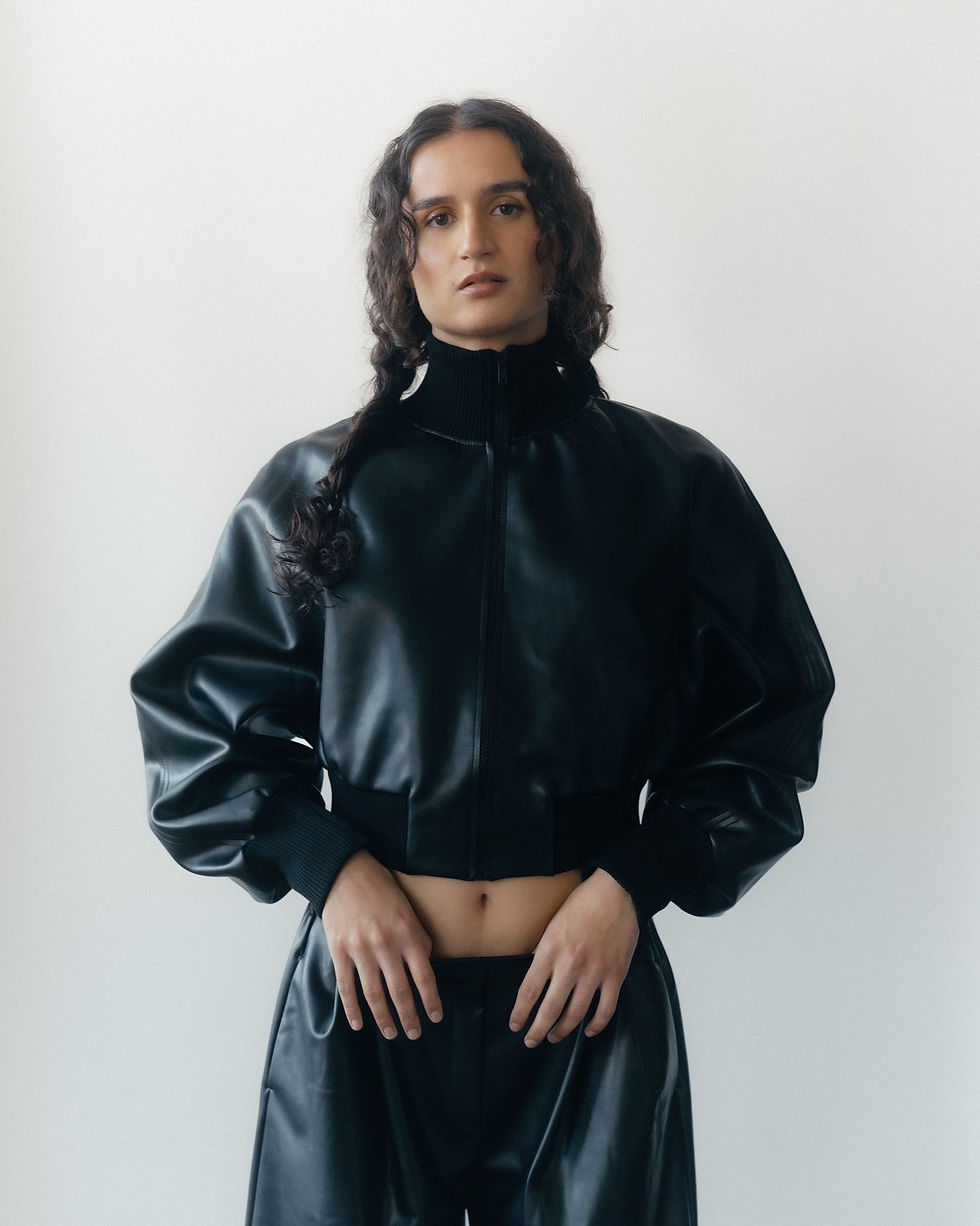
Upon meeting actor and creative force Macy Seelochan, it is immediately clear that her presence extends far beyond the roles she inhabits. Thoughtful, candid, and unapologetically creative, she speaks with the same emotional intelligence and bravery that have come to define her work on stage and screen.
From making history as the first trans woman to lead a production at Shakespeare’s Globe to carving out space for trans stories through acting, music, and writing. Macy is an artist whose work resonates deeply within a rapidly evolving cultural landscape and whose creative trajectory shows no signs of slowing down.
Macy’s work is defined by a fearless commitment to truth, whether through acting, music, or writing, often centring characters navigating identity, creativity, and survival in a world that can feel increasingly hostile. From her historic turn at Shakespeare’s Globe to her original short films and music, Macy invites audiences into stories shaped by resilience, humour, and emotional honesty.
5Eleven speaks to Macy about the creative bravery forged through landmark moments in her career, the personal experiences that inform her storytelling, and why, even in a dark cultural landscape, radical self-expression remains a powerful act of hope.
Words by Caoimhe Clements
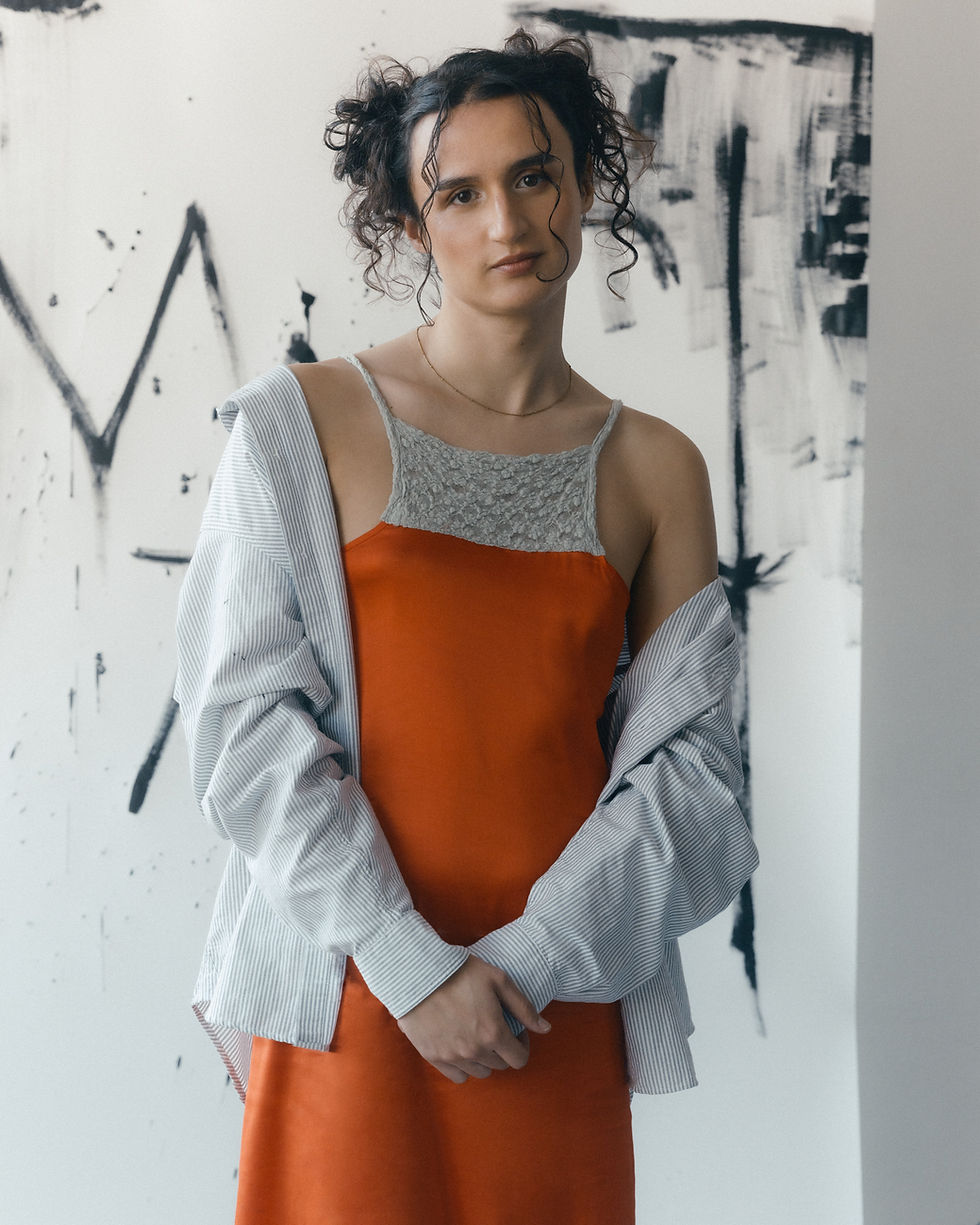
Photographed by Andrew Rankin and Macy Seelochan. Styled by Alton Hetariki. Hair by Sandra Hahnel at Caren using Shu Uemura - Art of Hair. Make up by Charlie Fitzjohn using MAC Cosmetics. Photographer assisted by Nirvana Seepersaund. Macy Seelochan appears courtesy of Prosper PR.
Jumper by Aries. Faux leather skirt by Nanushka
How does it feel to have Riot Women out in the world?
It feels really exciting. A lot of months of work, and I’m wondering how this is all going to be edited together. It feels really meaningful in a way. My mum and friends have been texting me and sending me messages. There are people who've kind of been coming up to me in the street, which has been a really unexpected blessing to have that intergenerational connection.
What drew you to the role of Miranda?
I think I really enjoy characters who are trying to put out fires. Miranda is the daughter of Jess, who is played by Lorraine Ashbourne. Lorraine's character is fiery, and so is Miranda's sister. I think being surrounded by fiery characters and fiery energy is so exciting when you're acting because you have so much to play off. So, I think what drew me to Miranda is her constant attempt to put out fires. Whenever I watched the series, I thought it was quite humorous, but with a real emotional depth.
What did you enjoy about working on set with the other cast members?
It was surprisingly joyful, always even during the more challenging storylines and scenes.
I think it's a real sign of a talented group of people when you can deal with a challenging topic, and it is not painful or uncomfortable on set. It never felt like we were being asked to do something uncomfortable, and so therefore, there was just so much joy and laughter, and I feel like from this project, I've grown so much as a person, because we just all spent hours getting food and going for walks. I definitely think I grew as a person from the project. Definitely!

Do you have a favourite memory from the show?
Elise Chapel, who plays Tom's wife Fern, all three of us went for dinner at this restaurant in Hebden Bridge. I never interact with Fern in the show; I didn't really know much about that side of the storyline. I was trying to just focus on my family's storyline, so it was nice to go for dinner and meet this character that I would never really meet on set.
Amelia Bullmore would come to set every day with a new story. It felt like she had a life in Hebden Bridge outside of filming, even though we were filming, you know, long, full shoot days. Somehow, every day she would arrive, and she would say she had been on a hike, met someone interesting and learned about their life. I remember one time she came in, and she found a DVD on the history of Hampton Bridge, and she watched it and was reciting facts about Hampton Bridge to us, which was, like, it was so unexpected. It was so sweet, and she was a fountain of knowledge. I was always amazed and excited to be on set with her.
What does a typical filming day look like for you?
They can use all the sunlight to film the show and have as much natural light as possible. Often, it would be a pickup around 5/6am and then hair and makeup and breakfast. The great thing about that would be that you’d often be on set by 8/ 8:30am, and then you would usually finish the day at 3pm or 4pm and then go get out of hair and makeup.
I think the thing that's so nice about this project is that it's set in West Yorkshire and Sally knows the lay of the land in that area, where all our trailers were based, where we were filming, and where we were all staying. They were all so close together because, you know, it's the way that they film these Wainwright projects. That was a really nice part of the project; everything was so close together. It was a really smooth, easy, chill project.
Riot Women brings forward themes of expressing yourself and finding your voice. Did you connect the themes to your own personal life?
Miranda begins the series putting out other people's fires. She's constantly trying to get a hold of her sister and wrangle her emotions, and the same with her mum. I think something I really connected to with Miranda is how she transforms throughout the season. She finds her own voice, he becomes a member of the band, and she kind of finds her power; I think all of the women do in this show. The whole show is about women finding power through music and through self-expression. For me personally, playing a character that found their voice was really impactful. It made me think about a younger me, moving to London, trying to work out who I was and where I was going. I could definitely touch back on some of my own experiences to play this character.

Was acting a part of your childhood?
In primary school, I got cast as Joseph in the Nativity and four or five days before we performed, I realised I couldn't do it, and I was too terrified. I told the teachers I wasn't doing it, and instead, they cast me as a set holder upper. My entire role was just to hold up the set while everyone else acted. I always say that I think that's where I first realised that I was a performer, as I was just on stage watching everyone else do it. My parents also met in the theatre. My mum did the dressing and costumes, and my dad worked at the box office of my hometown theatre. They were always taking me to the theatre as a kid.
What made you want to make acting your professional career?
When I was 16, I did my first professional job. I remember when I was younger, I don't know where the performing energy came from, but I knew that I either wanted to be a singer or an actor, and I just wanted to make art. My dream is to release some music into the world. I still want to do both. When I was 16, I got cast in my first professional show and being around professional actors, I was such a small part, and I had four or five lines, but being around professional actors, living like them, experiencing them working and building characters, I was so overjoyed and excited, and I was so transfixed by their lives. I keep bumping into those actors, actually. A few months ago, I bumped into one of them in a pub. Flashing back to that, I think that was probably the first moment I was like acting is where I want to be.
What themes would you explore in Music?
Before I went to study acting in London, I was studying music technology at college at A Level with the hope of being a singer. I kind of feel like I just fell into acting. I used to write songs all the time, and I actually have written a song, which I do think is coming out at the start of 2026! Which is a kind of love letter to the trans community and to my loved ones. I think music has such a power to say what you can't really say with words. There's so much power in music to access something deeper than speech can.
Moving forward, would you want to do more roles that require you to explore identity and self-expression more?
I love all forms of entertainment for their ability to explore hard topics. I definitely think identity would be something I want to keep pursuing. I want to pursue that in music! I think it's important to pursue that in acting. It's important to have characters like Miranda in stories like Riot Women because it's so important to have exposure to different life experiences. I think I would love to keep working, building, supporting and uplifting projects where identities are being explored, minority groups are being displayed and given voices and platforms for their voices - I would definitely be into that.
Who encouraged you to pursue the Arts?
My parents loved the theatre. We didn't go crazy often; we would go to the pantomime every year, but I think I'd probably say my parents, because they were around so many actors when they were younger, when they worked behind the scenes. They were never afraid of me doing this as a career, I think, as long as I could prove to them that I could be stable with it. I've lived in London since 2016, and they always come and see every show I'm in. When I was at Shakespeare's Globe in 2023, they booked their tickets months in advance. I would say my parents were my biggest advocates for me pursuing the Arts.

In 2023, you made history as the first trans woman to lead a production at Shakespeare's Globe. How did this experience shape you as a creative person?
It really solidified my self-belief. It's important to find self-belief through your own means, and at the same time, having the affirmation of leading a show somewhere like Shakespeare's Globe was so generally cool. That show allowed me to fine-tune my comedy skills, and also, that show really allowed me to fine-tune my bravery with comedy, Shakespeare and theatre. All three of those things you have to have such bravery to be because it's essentially a different language. I think that show really challenged and fine-tuned my sense of bravery and allowed me to go into future projects.
How do you choose projects, and what draws you to them?
I think genuineness. Sally's writing is so genuine, and as soon as I read the audition scenes, I had an instant image in my head of who Miranda was. When I met the team at the audition, I met Rachel Sheridan, the casting director, and Jess Taylor. They already had so many ideas for the character. They were so excited about working on it. I think I get inspired by other people's inspiration and excitement. You know, because I've been writing music and making my own project, I could just do that for the rest of my life. Work on my own visions and my own messages that I want to get out to the world.
In the future, are there any actors, directors, or any creative person that you would love to collaborate with?
Trans creatives who would be really cool to be in a room with, and the Bukowski sisters, who did The Matrix, it would be really fab to work with them. Joey Soloway, who is one of the creators of Transparent, was hugely influential to me, too. As a young person, I would love to work with them. There's a really gorgeous, terrifying, exciting novel called Manhunt, which is being adapted into a series. Gretchen Felker Martin, who's a trans writer, wrote it. To work on something like that, where the conversation is so ahead of its time, would be really cool. It is definitely my goal.
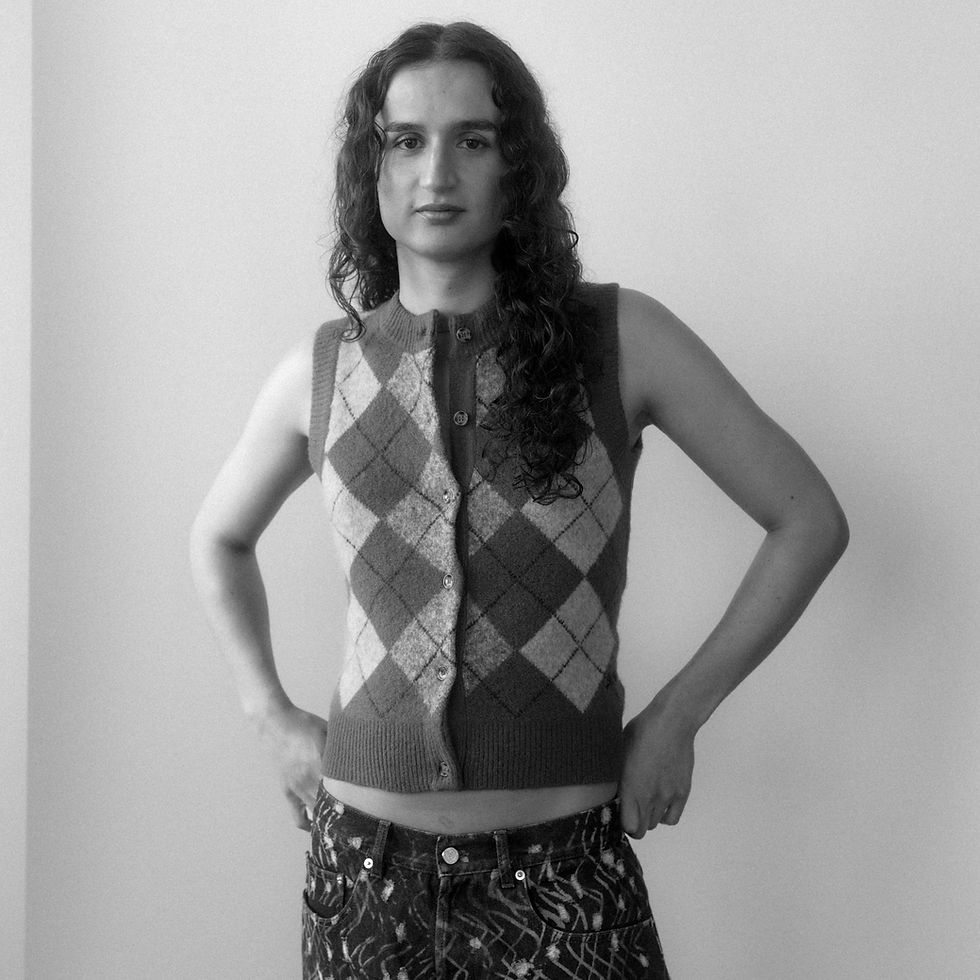
Left: Ribbed vest by Emello Right: Knit dress by Nanushka
You have created your own short films. Do you feel more drawn to writing and directing in the future?
Definitely. I'm excited to write more; I've got so many things I want to say, as do all creatives, I think. So, I’m excited to write more. Getting to write music has been really exciting as well. It's a whole other avenue of how to really pierce into someone's emotions and get your points across, without either just being too obvious or too discreet, you know, finding that balance? I’d definitely love to write more. I just love working with directors, because they always have such a vision, and every director has such a specific outlook. I don't know if I will do any more directing, but writing 100%.
When you're approaching your own short films. What particular emotions or themes do you feel more drawn to express?
I would love to work on more comedy projects. When I write, I get inspiration from darker places. I get the inspiration to start writing something when I've had a bad day, or I've had a challenging interaction, or a piece of news has come out that has frustrated me - that's when I start writing. It's kind of a back-and-forth in my own brain. I keep writing the darker stuff, and the film that I'm writing right now is all about someone who is struggling with the news and is struggling to continue with that every day. In this current dark landscape, I keep hoping one day I'll write comedy. I keep hoping one day I'll connect my funny bone to my writing, so we'll have to see.
What's one thing you've learned you want to take with you into your future projects?
That's one thing I've learned from Riot Women: the message of Riot Women and the process of making Riot Women really taught me not to be a perfectionist. The whole point of this punk band and the whole point of the punk movement is a real sense of like radical acceptance of where you are and what you're making. There's no trying to polish and perfect until it loses all its soul, and I think that quality is something I'm always going to cherish, and I think it will live in songs I write, short films I make and characters I work on in the future - just a real reminder to myself that everything I do is everything I have done. It's a time capture of me, and that moment in that creative flow and six months down the line, I'll make something different in a completely different energy, and that's the kind of punk rock energy.
In 2026, what does life look like for you?
I'm going to try to be unashamedly creative! Experiment and explore these different avenues of creativity - acting, music, writing and finding self-expression in loads of different places. I think that's where I want to go.
For young performers or creators, what would you tell them?
I would say resist the urge to simplify yourself. It's so easy to see other people's success and think that they got there because of who they are, and so then to try and morph yourself into them, or to think that your journey, your heritage, your childhood, your accent, all those things are too complicated, and to try and simplify yourself. Don't do it. Those are the things that will get you into those rooms with the right people, the people who are excited by that. Those are the qualities in you that will make magic in the future. Don't be a blank canvas, as some people say, be a canvas coloured with every single colour under the rainbow. Don't be a blank canvas. Be a multi coloured canvas. That's the best.
RIOT WOMEN is available in the UK on the BBC and on Britbox in the US.


Comments